
Sansriti’s new production inaugurated Mukhomukhi’s 30th anniversary festival, bringing Buddhadeva Bose’s Pratham Pārtha to a new generation of theatregoers after Swapna-sandhani’s interpretation in the 1990s. Among Bose’s verse-drama quartet based on the Mahābhārata, it stays the best-known probably owing to the agon of its popular hero, Karna.
I use the Greek word because Bose consciously followed the structure of Greek tragedy, composing three one-on-one meetings serially, stitched together by an intervening Chorus of two old men. The superimposition of the Western choric device on the Indian content may not endear the play to postcolonial audiences, since the elders exist only to link and comment—not exactly essential nowadays. But we respect director Debesh Chattopadhyay’s intention to stay as close to texts as possible—a virtue that the majority of Bengali directors wilfully ignore. His Pratham Pārtha reminds me of similar fidelity in his version of Six Characters.
As with all re-tellers, Bose played around with events in the epic. In the Mahābhārata, Krishna went to Karna first and Kunti went last (logic first, emotion last), but Bose reversed the order. And he totally invented Draupadi going to Karna—she never did, originally. Each of the trio approaches him with their own agenda, all to ensure the Pandava cause in battle.
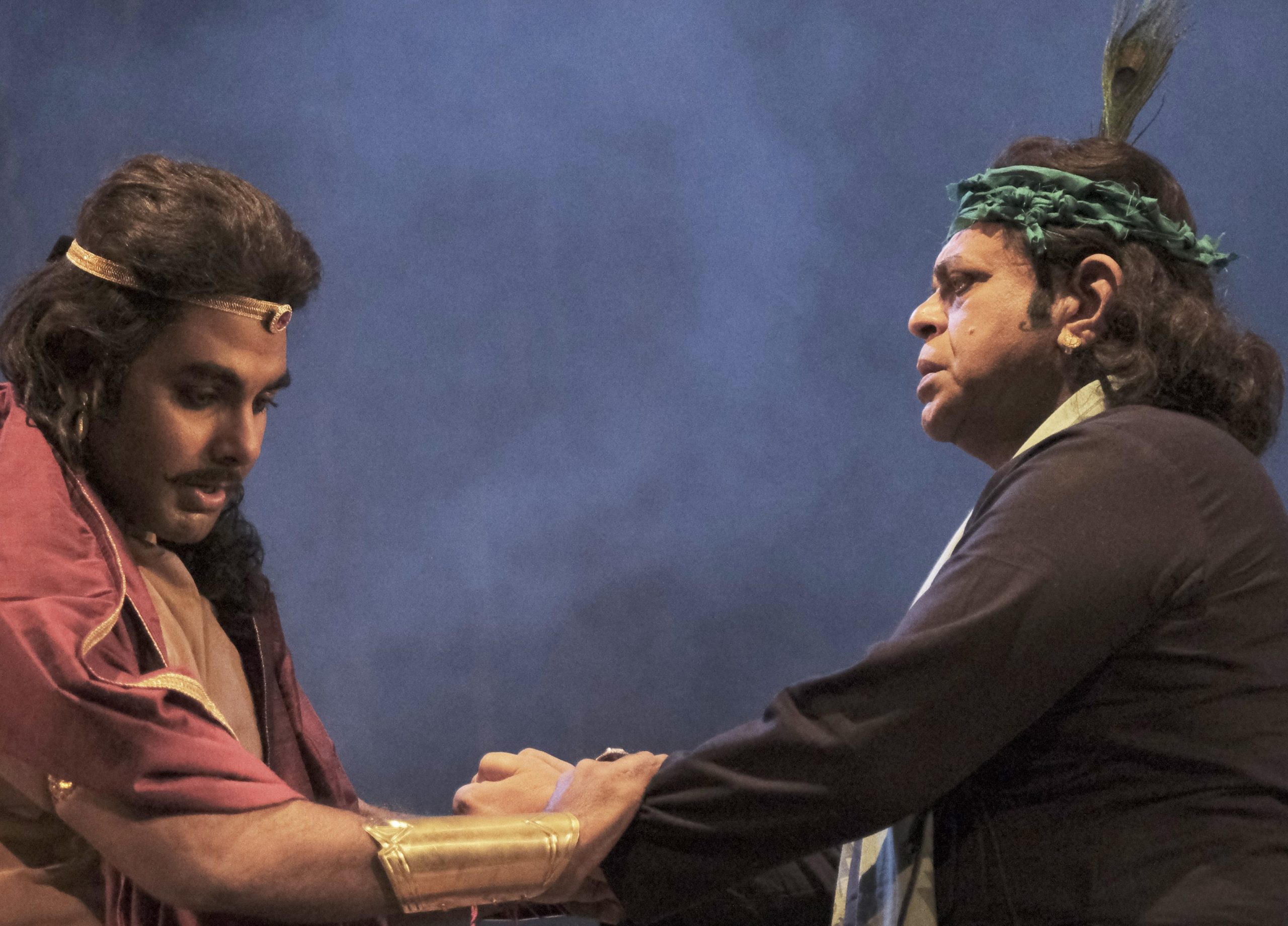 Debesh’s anti-war message comes out clearly: no one wins in Kurukshetra, all are losers like in most wars. His casting of the visibly older Rajatava Dutta as Krishna (photo) raises intriguing questions. Scholars agree that Krishna was a super-senior citizen at the time of the battle, though one could argue that as an immortal, he should be depicted agelessly. But given that his age shows here, shouldn’t Debesh apply the same criteria to the others, especially Karna portrayed by Arna Mukhopadhyay, whose adolescent looks and manner belie the fact that Karna in the war was at least a father if not grandfather? To continue in this vein, Draupadi was in her 50s and Kunti obviously much older.
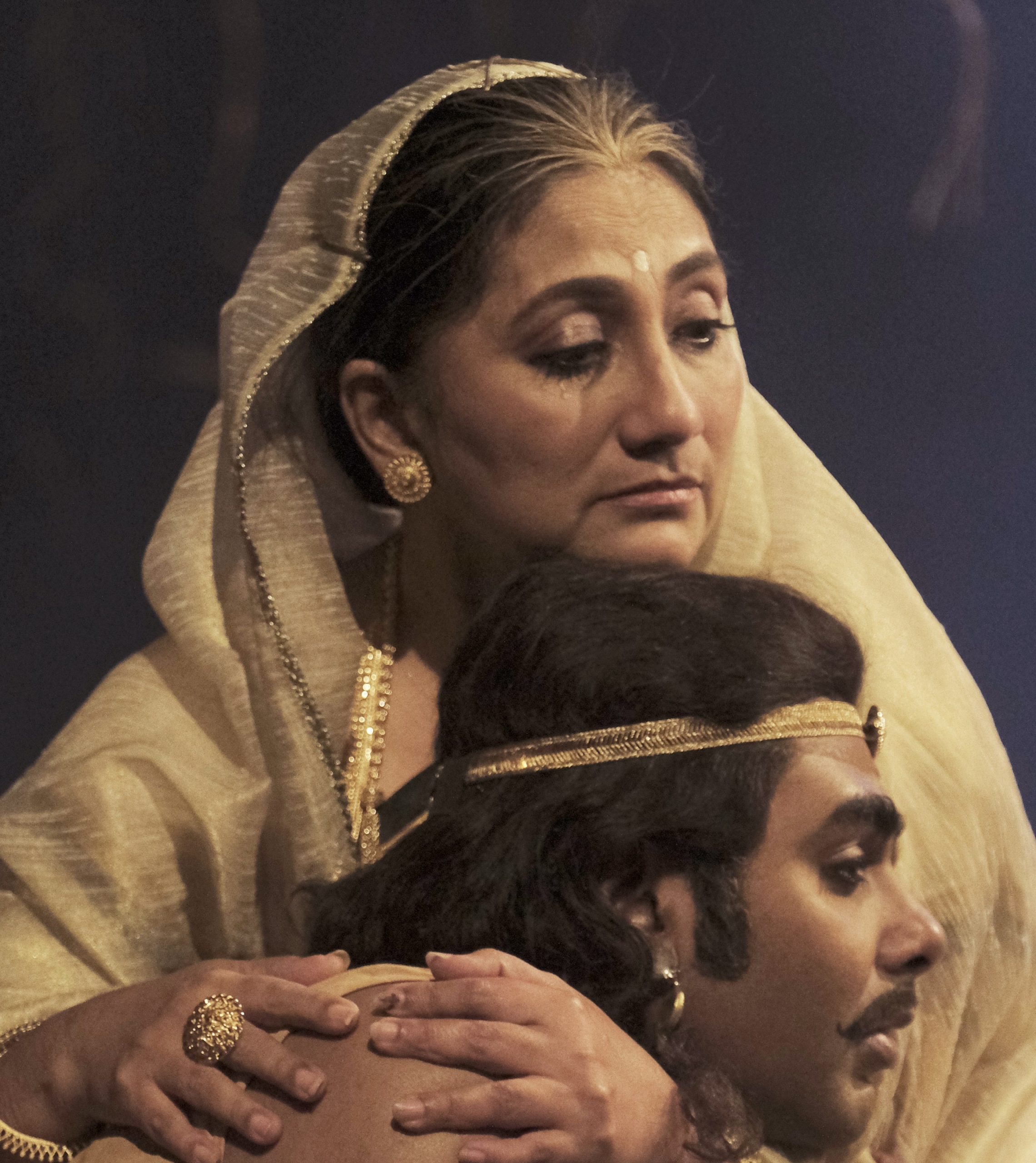 Nonetheless, let us suspend our realistic disbelief. All four actors perform with depth as well as differently. Arna wavers each time under the reasoning thrown at him, but stays steadfast in his aim to remain always defeated, and embraces defeat, asking Krishna’s blessing not to return to an earthly life. Senjuti Roy Mukherjee (photo left) gives us the classical characterization of Kunti that she could adopt equally to Tagore’s Karna-Kunti-Sambād.
 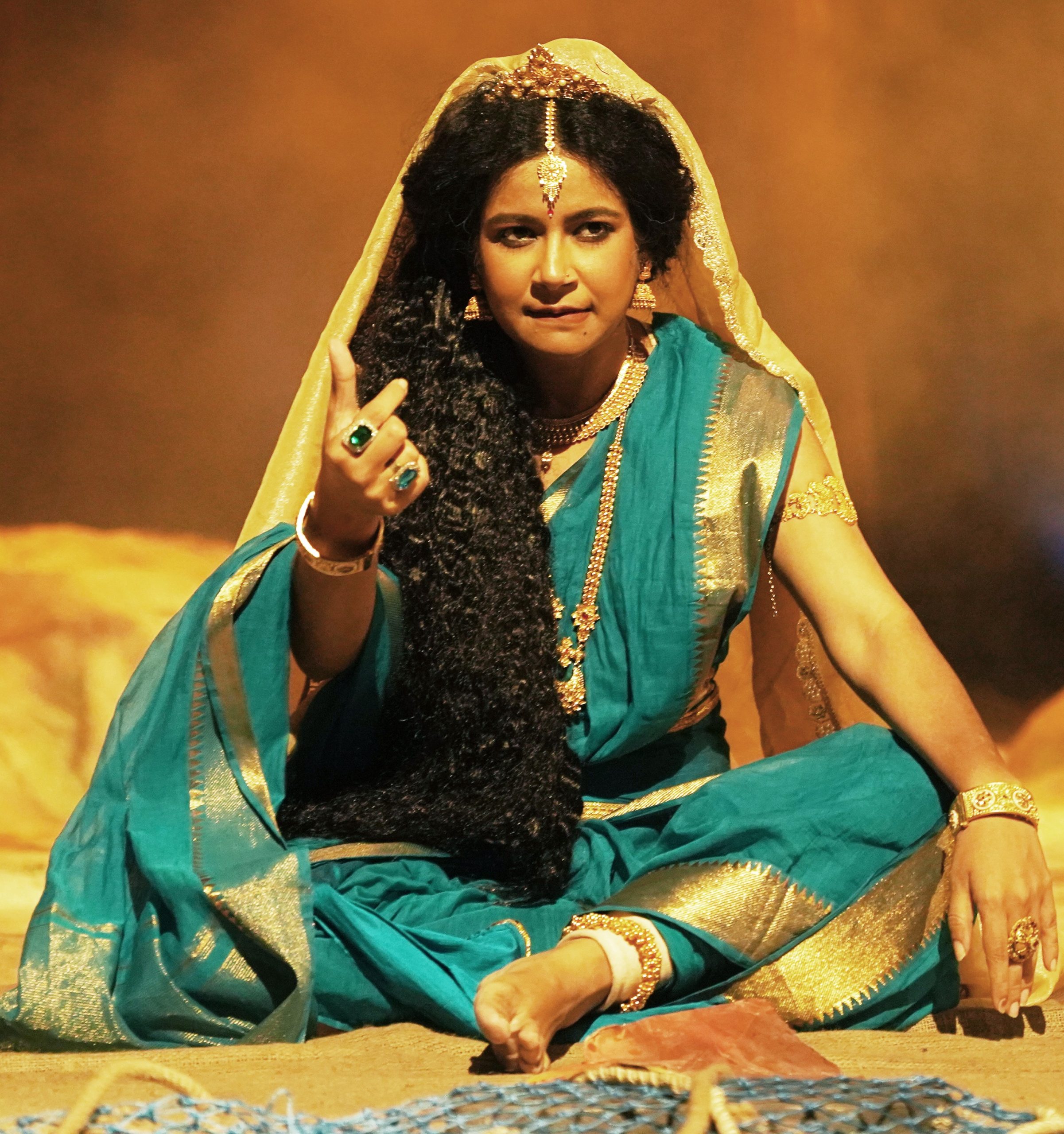 Turna Das, however, reinvents Draupadi as her own (photo right): limping as she tries to pluck a thorn that has pricked her sole, tidying up her presentability, failing to hide her feelings for Karna yet wanting only his friendship. And Rajatava makes Krishna a wise yet weary emissary, going through the motions of what he knows as futile.
(17 August 2026)