
Reviews
TINER TALOYAR
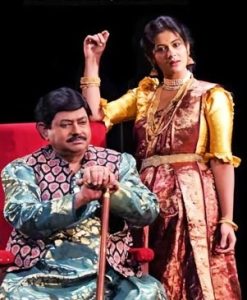
Tiner Taloyār remains the best drama ever written about the Bengali commercial stage, therefore any revival must treat it with obeisance. Suman Mukhopadhyay does just that—except for an aberrant epilogue—and
Tiner Taloyār remains the best drama ever written about the Bengali commercial stage, therefore any revival must treat it with obeisance. Suman Mukhopadhyay does just that—except for an aberrant epilogue—and
The Padatik ensemble touches top form collectively on the latest productions in their two ongoing series, the literary Writers on Stage and the informal Theatre in Jeans. Beparwāh Manto celebrates

Any group and director realize what a challenge staging a Shakespeare classic poses. Inevitable comparisons with previous productions and the plethora of critical interpretations complicate the matter, exemplified by the

Returning to what they do effortlessly on stage—playing off each other, just the two of them, like they did in Dear Liar—Naseeruddin and Ratna Pathak Shah enjoy a national run

Continuing active theatre well into his eighties, Ashok Mukhopadhyay does a star turn as the hero in Theatre Workshop’s Great Bengal Theatre and directs Nirbak Abhinay Academy’s Saodāgarer Naukā simultaneously,

Suman Sengupta’s work as dramatist-director attains a peak on Chetla Krishti Sansad’s Āmār Gān, hopefully one of many other peaks in future. It deservedly won Theatre Workshop’s annual Satyen Mitra
Time once again to record the activities of Bengali groups outside Kolkata. The two reviewed in this column demonstrate technical standards indistinguishable from their metropolitan counterparts, proving that the so-called
Kolkatans can currently see Bengali productions based on the works of Central European authors, not a very common occurrence. Ganakrishti has of course regularly translated plays by Evald Flisar from
The high costs of bringing an out-of-town proscenium production here have scuttled our once-regular exposure to such theatre. In its place, we get more barebones solo or duo performers, Mumbai

Debasish Ray’s fascination with history has led him to compose biodrama on two pioneers, of Bengali printing and French painting respectively. For Aneek, he directed Āksharik, which he dramatized from

Bengali theatre has resurrected its links with three major 20th-century European dramatists: Sławomir Mrożek of Poland and Nobel Prize-winner Dario Fo and his wife Franca Rame, of Italy. Both the
Education has become a central concern for several Bengali groups ever since our very own “School for Scandal” erupted in front of our eyes last year. Among recent productions, I